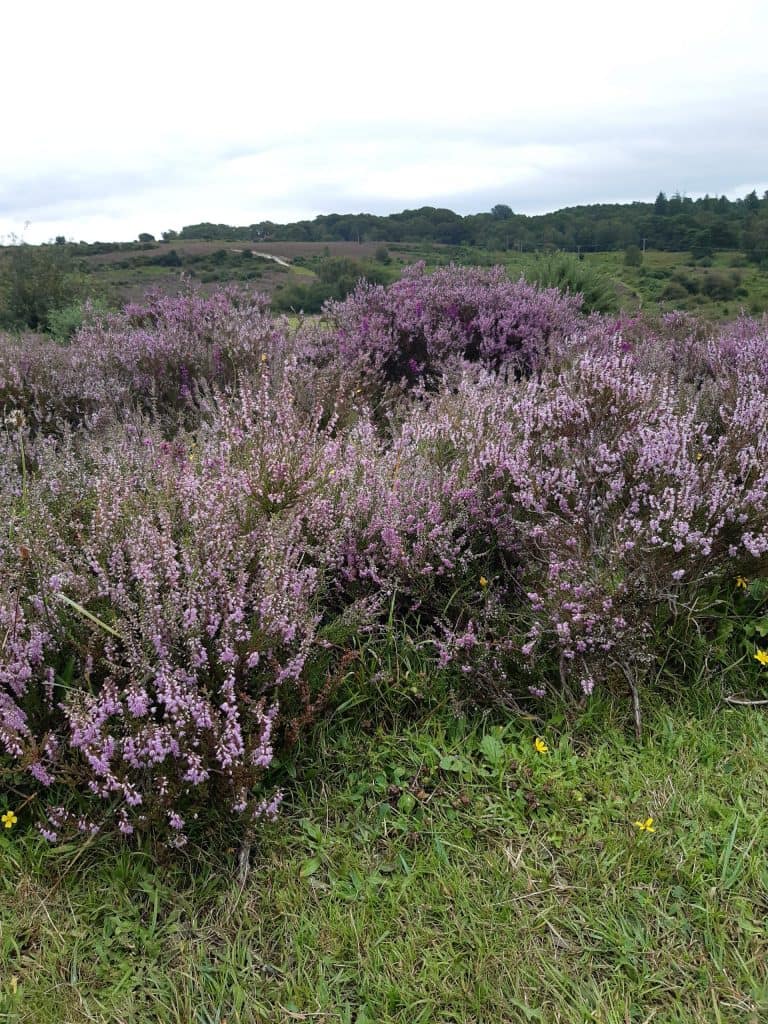
One of the most unique noticeable features of the New Forest’s heathland is the great swathes of heather. Their changing hues colour the landscape and mark each passing year. There are three species in the
One of the most unique noticeable features of the New Forest’s heathland is the great swathes of heather. Their changing hues colour the landscape and mark each passing year.
There are three species in the forest – common heather, bell heather and cross-leaved heath heather. All three are rich in nectar and pollen, enabling producers to gather honey with a distinctly dark and delicious fragrance and taste. Permits are issued for hives to be placed in certain areas of heather each year in the New Forest.
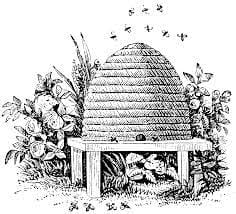
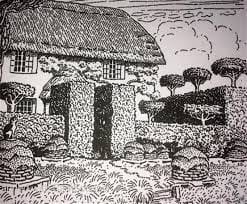
The earliest known proof of humans gathering and using honey can be seen in Spanish cave paintings dating back 8000 years. Carefully sealed honey can keep for thousands of years. In the New Forest there were small banked enclosures for hives to protect them from damage from passing stock. These “bee gardens” were in small entrenched areas about 5m square topped with hedges and were to be found in area such as Bealieu, Brockenhurst and Bull Hill. At this time the honey was gathered in “skeps”, which were beehive baskets.
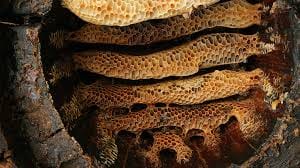
Honey is a sweet, viscous food substance made by bees from floral nectar, which is the sugary secretions of plants. It is stored in honeycombs and can be gathered from bee colonies in the wild or from hives of domesticated bees. Honey is classified by its floral source, hence the distinctive nature of New Forest honey. It is essentially pure sugar!
Bees collect nectar and honeydew to support their metabolism and muscles used during foraging trips, or to store as a long-term food supply. It is astonishing that each bee can store up to 40mg of honey in its honey stomach, which can be half its total body weight and can take an hour to fill from the nectar of up to 1000 flowers! Back in the hive the bees ingest and regurgitate the honey for about 20 minutes until it is ready to store. They also constantly flutter their wings to circulate the air and evaporate water from the honey. Only when it is reduced to about 18% of its original state has it reached its saturation point and will no longer ferment. The bees then store in capped cells within the hive.
Bees are the world’s most important pollinators, ensuring the pollination of one third of food crops and 80% of all flowers.
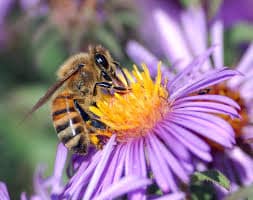
Each individual hive will produce about 65lb of honey each year – many commercial honeys are blended A single colony of bees needs to collect around 50kg of pollen and 150kg of nectar each year, just to survive, before any surplus honey can be harvested by the beekeeper. Polyfloral honey is produced from many wildflowers and has a varied flavour. Honey contains both fructose and glucose and each tablespoon provides about 46 kilocalories. Throughout history and across the world, honey has been used for medicinal purposes – treating wounds and burns, as an antibiotic and for coughs. If honey becomes cloudy during storage and starts to crystallise it can be stood in a bowl of hot water to restore its clarity. Set honey is a good sign that its real honey, and many seek set honey, as it is delicious on toast! Modern medicine also promotes honey as better than other sources of sugar for heart health and because of its plant compounds. It is known to reduce blood sugar levels and blood pressure, regulating the heartbeat and prevent the death of healthy cells. It is not to be given to under ones, however, due to a small risk of botulism. Many hayfever suffferers find that very local honey taken daily can reduce their symptoms.
How to tell a good honey? Its quality is determined by its fragrance, taste and consistency. Honey made only from a certain area ( single origin honey, as a beekeeper would call it ) will be most flavoursome and there are several good New Forest producers whose honey will bring the wonderful taste of the heathers and wildflowers to your plate. Having tried several I can assure you that the differences are quite remarkable and you will find the one you most like – once tasted you will find that the cheaper blended honey in the supermarket has lost its appeal completely!
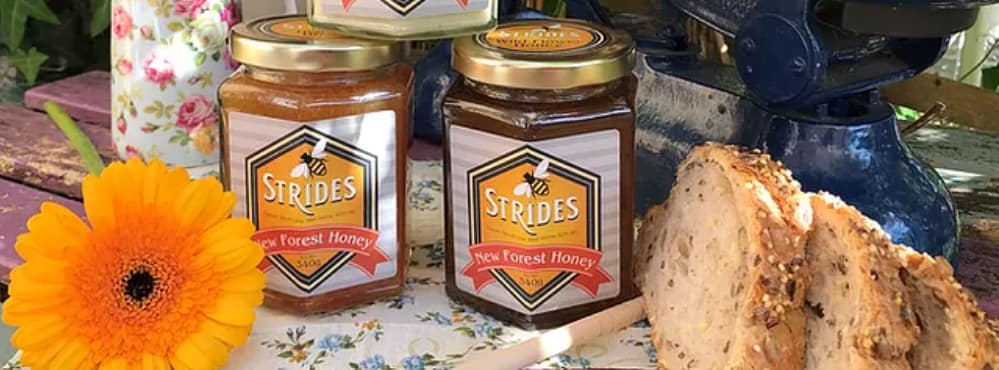
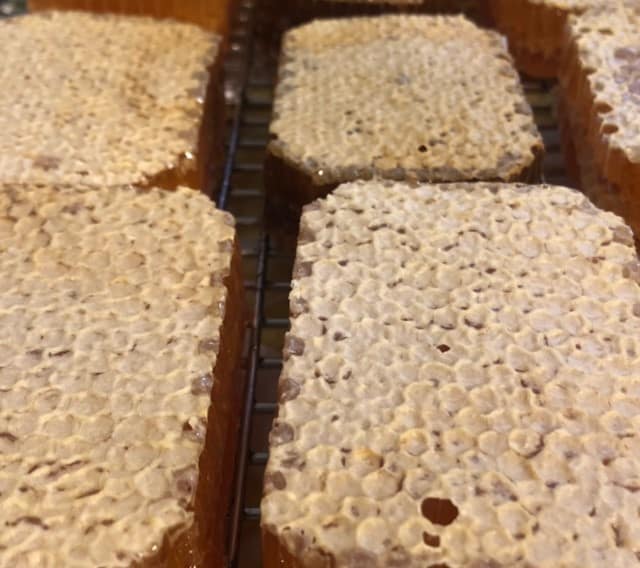
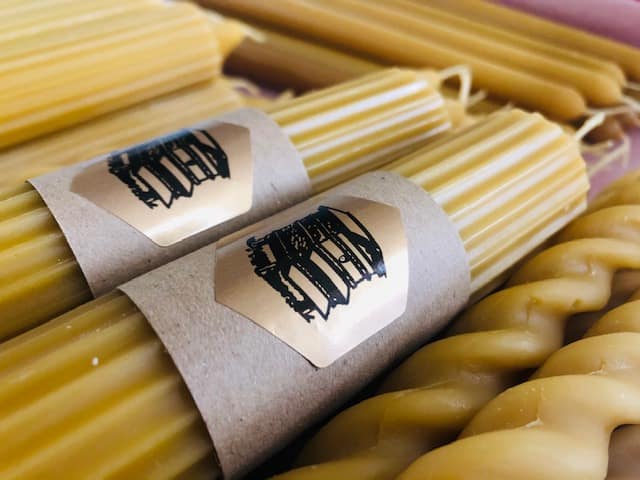
Available from Lymington market, Strides offer a variety of natural golden 100% raw honey – unheated and unpasteurised – each one very distinctive and from a specified group of hives. Based in West Wellow, Strides also sell honeycombs, bees wax, soap and candles and can be contacted in person at the market, on facebook, via email on stridesnewforesthoney@gmail.com and via their website : https://www.stridesnewforesthoney.com. 07392 001188. Jack is always at the market and is delighted to chat and offer tastings too.
The Noble Bee have 70 hives in several different apiaries across the New Forest, producing single origin wildflwoer honey. In August Simon Noble has special permits to take his hives out onto the heathland for the flowering of the heather, so the bees can produce monofloral heather honey. Within foraging distance of his farm, there are lots of sweet chestnut trees, so the summer harvest always has a noticeable flavour of sweet chestnut honey. By contrast, the bees in brockenhurst park estate collect nectar mainly from small leaf lime trees, giving a recognisable almost minty taste. Simon is the third generation apiarist and also offers open days and courses in the summer. His honey is coarsely filtered only and can be purchased at the Motor Museum, Noohn in Burley, St Barbe Museum in Lymington and Fairweather nurseries as wel as through his online shop. Simon farms in Hythe and can be contacted via the website : www.thenoblebee.com.


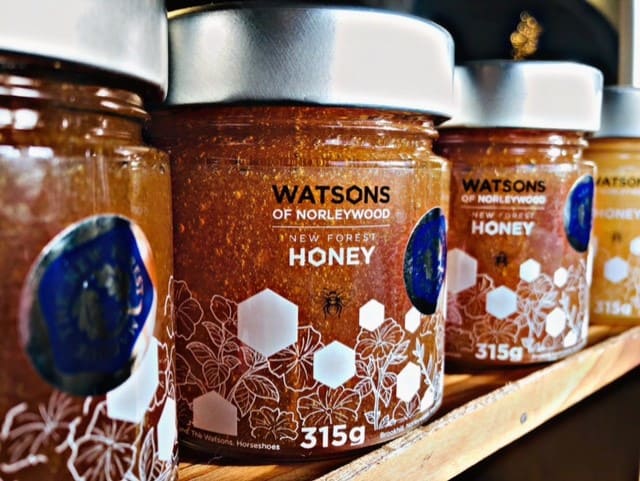
Member of the New Forest Marque, Watsons of Norleywood offer home delivery. Krysia took up beekeeping following in her fathers footsteps about 6 years ago, and is now helping to look after the New Forest & District Beekeepers who have been supporting beekeeping in the Forest for over 100 years. They offer training to beginners and also have apiary training days for all members. She has a number of apiaries across the Forest and produces small batch local honey, with a variety of floral variants depending on the time of year. She was lucky enough to have access to the heather last year so have produced some amazing honey from the Beaulieu area which is renowned for its medicinal qualities – similar to Manuka honey, but less food miles!! Watsons honey is stocked in a select few shops across the Forest. and can be contacted on facebook , on 07717 874957 and via the website : krysia@newforesthoney.com.
The importance of the role of the bee in tackling climate change is growing in awareness, with the introduction of inset pollinator pathways to link exisitng wildlfe areas and support networks for pollinators. We can all help with planting small wildflower areas and going back to the traditional cottage garden flowers in our gardens or even in a windowbox if you have no garden. New Forest honey is a special and beneficial food and once tasted, I am sure you will think the extra cost is well worthwhile.
Jazz Bee Honey ( grumpybees@hotmail.co.uk) started selling honey in 2007 and other New Forest honey suppliers are Wild Close Bees and Brockenhrust Bee ( sally@brockenhurstbees.com)
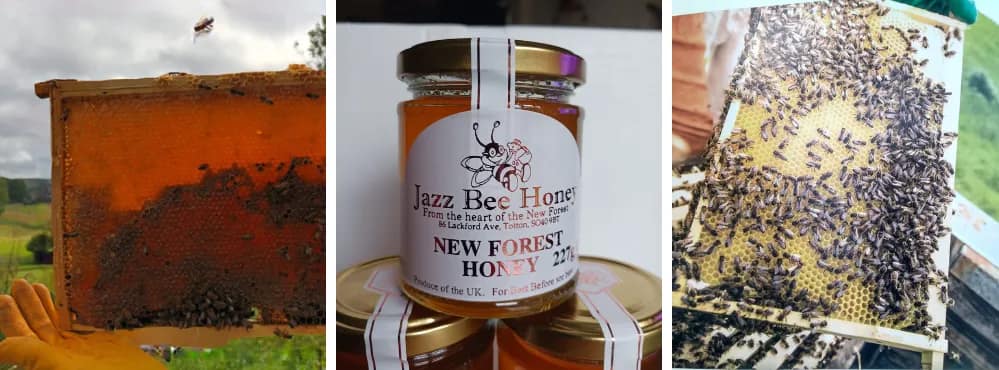
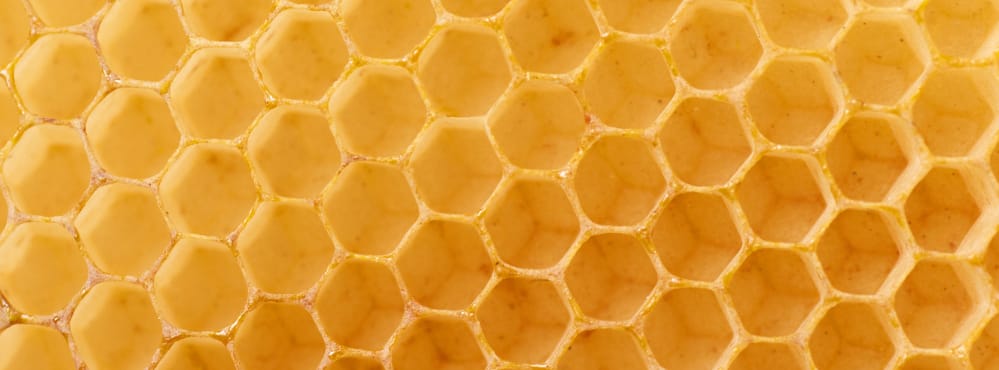
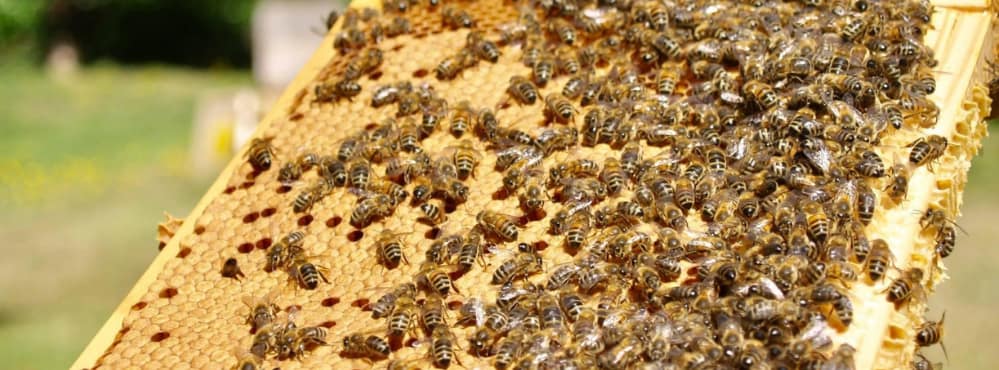
Honeycombs, wax products along with heather and bloosm honey is availablefrom Waterside Apiaries – janroper22@talktalk.net.
Lakeside Bee Services focusses on supporting new and experienced beekeepers and will extract bees and provide all the products needed too. Marcus can be contactyed on marcus@lakesidebeeservices,com.