
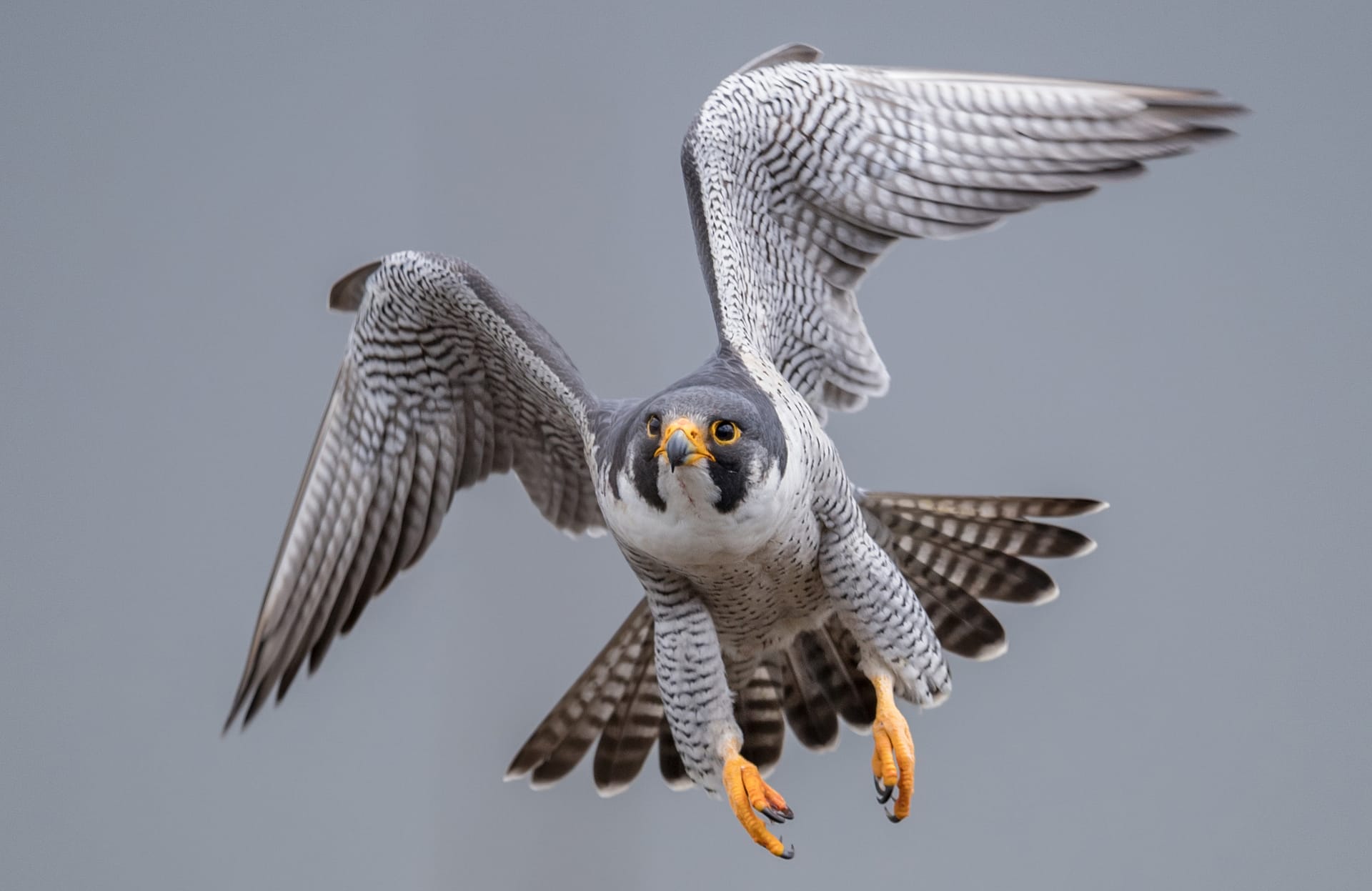
Since 2017 the 30-metre-high iconic octagonal water tower of New Milton has been home to a pair of peregrine falcons – every year since they have successfully reared at least 2 chicks, and usually 3.
Since 2017 the 30-metre-high iconic octagonal water tower of New Milton has been home to a pair of peregrine falcons – every year since they have successfully reared at least 2 chicks, and usually 3.
Sadly 2024 has not yet seen the pair return to their home and no nest has been built in the box installed by Bournemouth Water high in the turret and used by them for the last 8 years. Some sightings of the male circling the tower have been reported, but Keith Betton, Chairperson of Hampshire Ornithological Society, reports that the pair are unlikely to breed this year. Doubts about the whereabouts of the female remain too – peregrines mate for life.
First spotted around the tower in September 2016 the ornithological society liaised with Bournemouth Water ( Sasha, Climate Change Officer) and New Milton Town Council (Joanna) to agree the best place for the nesting box and the webcam installed was a source of great interest and joy for observers, particularly during lockdown.4 chicks were raised in 2020 and gained a huge social media following, especially on YouTube during the breeding season). There is still a Facebook group New Milton Peregrines, which keeps interested people updated.
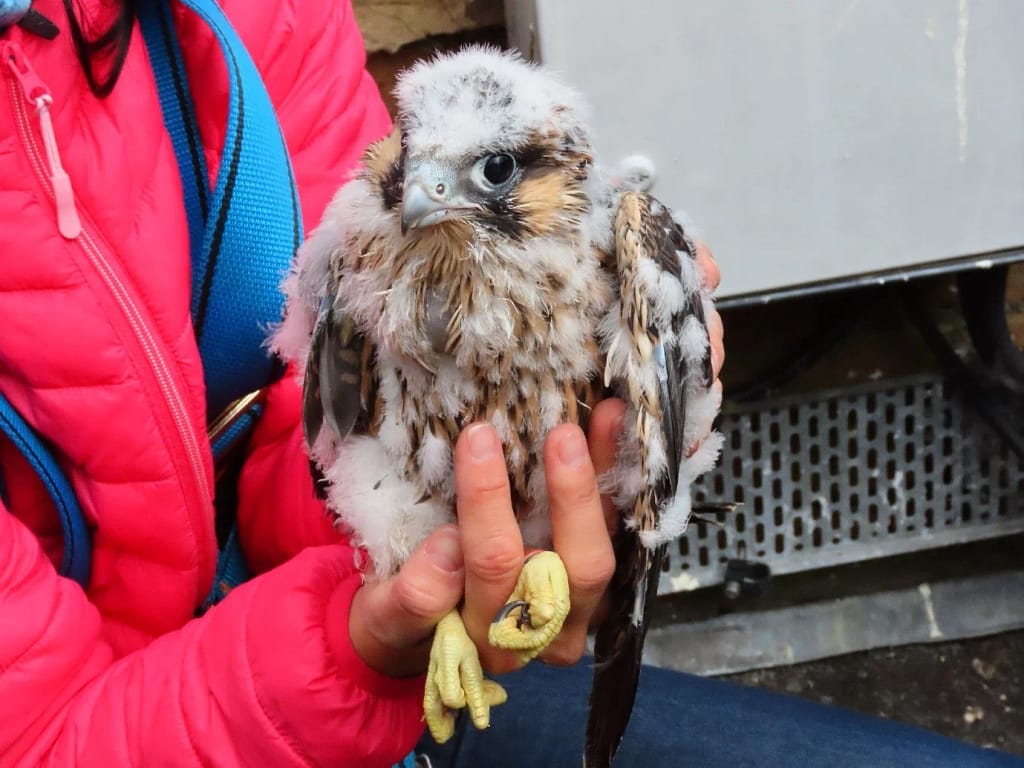
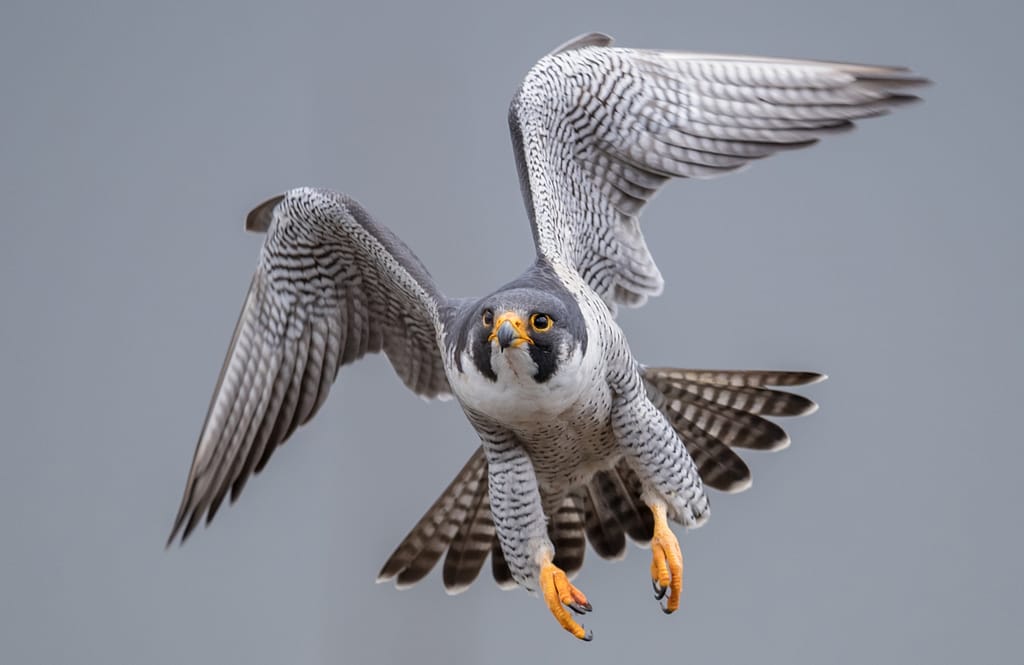
Peregrine falcons falco peregrinus are the fastest fliers, reaching speeds of up to 200 miles per hour and, as with many raptors, the female is considerably larger than the male (1.2 kg to 700g on average). Living up to 21 years they usually lay 4 eggs with a successful fledging of 3. One third of their diet is pigeon and they can see up to 3km, which is 8 times the range of a human!
They had been at risk of extinction in the 1970s and were afforded the highest level of legal environmental protection. Since the banning of DDT, the numbers have increased and there are now twenty pairs in Hampshire and 1500 nationwide. Known as the “wandering” falcon, they are the world’s most widespread raptor and have adapted to use tall man-made structures. With their long-pointed wings and long tails, peregrines have long been favoured falconry birds and catch their prey on the wing using stoops – swift, dramatic dives, attacking their prey with clenched talons and killing on impact. Grey, black and white with yellow legs, they average between 39-50cm in size. Those lucky enough to have watched the webcam will have seen the clutches of 3-4 reddish brown eggs, incubated for a month and the chicks fledging at about 5-6 weeks.

It is so sad that we probably won’t get to see this in 2024 but hope that the tower remains an attractive nesting site in the future.